

Contents
- What is micromanagement?
- Is micromanagement a form of bullying?
- Common signs of micromanagement
- The impact micromanagement can have
- Why do managers micromanage?
- Possible scenarios where micromanagement may occur
- 10 ways to deal with a micromanager
- Frequently asked questions
- How can HR teams address micromanagement?
What is micromanagement?
Micromanagement is a management style characterised by excessive oversight and close control of employees' work. Rather than setting clear expectations and allowing people to work independently, a micromanager tends to stay involved at every stage, scrutinising decisions, requesting frequent updates, and often revising work that has already been completed. Rather than delegating responsibility, a micromanager retains control over details that would ordinarily sit with the employee.
It is worth distinguishing micromanagement from normal managerial oversight. Some level of involvement is expected, particularly when an employee is new to a role or working on an important project with multiple stakeholders. Micro management becomes a problem when it is applied consistently, regardless of an employee's experience or track record, and when it begins to affect their ability to do their job.
Micromanagement often stems from a lack of trust and a fear of failure, but it's a leadership style that ultimately suffocates innovation and employee engagement. Empowering your team with autonomy isn't a risk; it's an investment in their growth and the company's future."
Is micromanagement a form of bullying?
Micromanagement and workplace bullying are not the same thing, though the line between them can sometimes be difficult to identify. Micromanagement is typically rooted in anxiety, a need for control, or a lack of confidence in delegation. In most cases, there is no deliberate intention to cause harm, even if the impact on the employee is significant.
Bullying, by contrast, involves behaviour that is intended to intimidate, humiliate, or undermine a specific individual. Where micromanagement tends to be applied broadly across a team, bullying is usually targeted. The ACAS definition describes workplace bullying as "offensive, intimidating, malicious or insulting behaviour" that involves an abuse or misuse of power.
The difficulty is that someone micromanaging can begin to feel indistinguishable from bullying, particularly when it is directed at one person, involves public criticism, or continues despite the employee raising concerns. If the behaviour is causing significant distress, it is worth considering whether it has crossed that line.
Some questions worth asking include:
- Is this behaviour directed at you specifically, or does your manager treat the whole team this way?
- Has the behaviour continued or escalated after you raised it?
- Is it affecting your ability to do your job or your mental health?
If you are unsure whether what you are experiencing constitutes bullying, the National Bullying Helpline offers free, confidential support. Your organisation's HR team or Employee Assistance Programme can also provide guidance on next steps.
Common signs of micromanagement
- Receiving detailed instructions on tasks you are experienced in completing independently
- Having decisions reversed without clear explanation or discussion
- Being asked to copy your manager into communications that do not need their involvement
- Completed work being revised without a conversation
- Frequent progress updates requested on tasks that are on track and shouldn’t require it
- Judgement or recommendations routinely questioned
A consistent pattern across several of these areas is more likely to indicate micromanagement than isolated incidents.
The impact micromanagement can have
The effects extend beyond individual frustration. Work-related stress, depression, and anxiety account for 22.1 million lost working days in the UK each year, around half of all work-related ill health cases. Management practices that limit autonomy are a recognised contributing factor, and the knock-on effect on employee engagement can be significant. Organisations that take employee wellbeing seriously are better placed to identify and address management behaviours before they affect performance.
From a business perspective, 42% of workers have considered quitting their jobs due to poor management, making micromanagement a retention risk as much as a wellbeing one.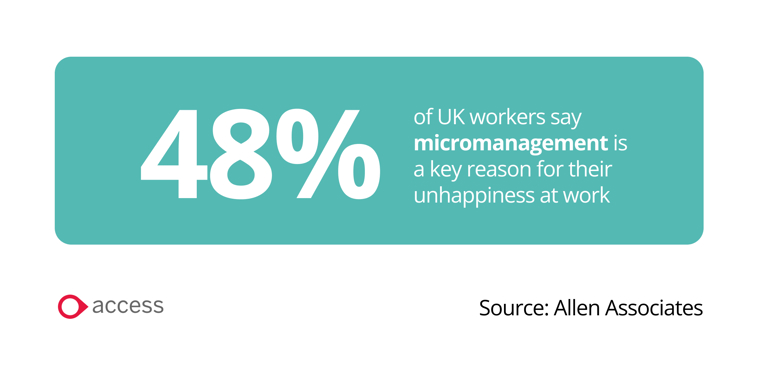
Why do managers micromanage?
In most cases, the behaviour reflects the manager's own pressures rather than the employee's performance. Common reasons include:
- Fear of failure: feeling personally accountable for every outcome makes delegation difficult
- Difficulty letting go: managers who have moved from a specialist role may struggle to step back
- Pressure from above: scrutiny from senior leadership can be passed down to the team
- Limited management experience: defaulting to control as a way of managing uncertainty
- Previous negative experiences: a difficult experience with a past team member applied to everyone
Possible scenarios where micromanagement may occur
While micromanagement can affect any team, some situations make it more likely to happen. Let’s look at a few examples.
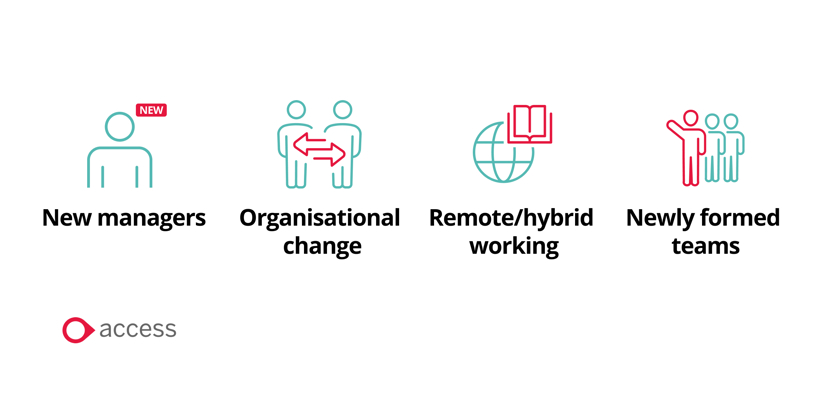
New or transitioning managers
Someone who has recently moved into a leadership role, particularly from a specialist or technical position, may not yet have developed the confidence to delegate. Staying close to the detail can feel safer than trusting others to handle work they previously did themselves.
High-pressure projects or periods of organisational change
High-pressure periods can trigger micromanaging behaviour in managers who would not otherwise exhibit it.. When the stakes feel high, the instinct to maintain control can override a manager's usual approach. This type of micromanagement is often temporary, but it can still have a significant impact on the team while it is happening.
Remote and hybrid working
Without the visibility that comes from working in the same space, some managers compensate by increasing check-ins or monitoring activity through digital tools, a pattern closely linked to productivity paranoia. Research suggests that remote workers are particularly likely to experience this form of oversight, with 59% of employees reporting stress or anxiety as a result of workplace monitoring and surveillance.
When teams are new or still developing
In newly formed teams, managers may not yet have a clear picture of each person's capabilities, leading to a higher level of involvement while that understanding develops. A structured onboarding process can help set clear expectations from the outset, reducing the likelihood of close oversight becoming a default.
10 ways to deal with a micromanager
Now we’ve identified what micromanagement is, let’s explore how to deal with micromanagers in the workplace and the steps you can take to handle the situation constructively.
1. Try to understand the root cause
Consider what might be driving the behaviour before responding to it. Is the manager under pressure on a specific project? Are they new to the role? Understanding the context can help identify the most constructive way to respond, and in some cases a manager may not be aware of the impact their approach is having.
2. Set clear boundaries around communication
Rather than declining requests outright, propose an alternative that meets the manager's underlying need. If daily updates are being requested, a structured end-of-week summary may provide the visibility they are looking for while reducing interruptions. Framing the conversation around what works best for the team tends to land better than focusing on what you find frustrating.
3. Communicate proactively
Much micromanaging behaviour is driven by uncertainty. Providing brief, regular updates before being asked can reduce the need for check-ins over time. A short message when a task is completed, or a quick summary at the start of the week, can keep a manager informed without requiring constant back-and-forth.
4. Build trust through consistent delivery
Trust is built over time and often in stages. Meeting deadlines, following through on commitments, and flagging potential issues early all contribute to a track record that makes close monitoring harder to justify. Demonstrating reliability over time can shift the dynamic meaningfully.
5. Involve your manager at the planning stage
Agreeing on goals, timelines, and key milestones at the start of a project, then working independently within that framework, gives the manager visibility without requiring them to be involved at every stage. Decisions made independently are also easier to justify when they sit within a structure the manager has already approved.
6. Make your progress visible
Shared project management tools, brief weekly summaries, or a simple log of completed tasks can help a manager stay informed without ongoing conversation. This also creates a useful record of output if the situation needs to be escalated later.
7. Use one-to-one meetings effectively
Taking an active role in setting the agenda for one-to-ones, raising updates and flagging upcoming work proactively, reduces the likelihood of ad hoc interventions between meetings and gives the manager a regular touchpoint that may reduce informal check-ins.
8. Clarify responsibilities on collaborative work
Ambiguity around ownership is a common trigger for micromanagement. Establishing clear roles at the outset of a project, including how decisions will be made and progress communicated, reduces the scope for unnecessary intervention.
9. Have a direct conversation
If the behaviour is having a sustained impact on your work or wellbeing, raising it directly is often the most effective course of action. Focus on the impact of specific behaviours rather than broader judgements. Explaining that detailed instructions on tasks you are confident in makes it harder to work effectively is more likely to be received constructively than a general statement about trust.
10. Involve HR if the situation does not improve
If a direct conversation has not led to change, HR is an appropriate next step. An informal conversation with an HR adviser can clarify your options and may facilitate a resolution without a formal process. If the behaviour is serious or ongoing, a formal grievance may be required. Documenting specific incidents, including dates and impact, before raising a concern is advisable.
Frequently asked questions
What is the definition of micromanagement?
Micromanagement is a management style in which a manager exerts excessive control over employees' work, staying closely involved in tasks and decisions that would typically sit with the employee. It is characterised by frequent check-ins, close scrutiny of output, and limited delegation.
What are the most common signs of a micromanager?
Common signs include receiving detailed instructions on familiar tasks, having decisions reversed without explanation, being asked to copy your manager into routine communications, and having completed work revised without discussion.
Why do managers micromanage?
Most commonly driven by anxiety, a lack of confidence in delegation, or pressure from senior leadership. It is particularly common among managers without formal leadership development, and in most cases is not a deliberate attempt to undermine employees.
Is micromanagement bullying?
Not necessarily. Micromanagement is typically about control rather than intent to harm. However, when the behaviour becomes targeted or persistent, it may constitute bullying. The National Bullying Helpline can provide guidance if you are unsure.
How can HR teams address micromanagement?
Widespread micromanagement within an organisation points to a broader cultural issue. Workplaces where it is common often share certain characteristics: unclear performance expectations, limited psychological safety, and managers who have not received adequate leadership development.
For HR teams, this means investing in management development that focuses on how people lead, not just what they deliver, and ensuring employees have clear routes to raise concerns. People analytics tools can also help, giving managers visibility of team performance without the need for constant direct oversight.
To find out more about how PeopleHR can support your HR and management processes, watch a 4-minute demo or get in touch with our team.